Zen Buddhism and Nestorianism Series 30:If you have your original face, you should know the Lord.
<◆Zen Buddhism and Nestorianism Series 30:If you have your original face, you should know the Lord.>
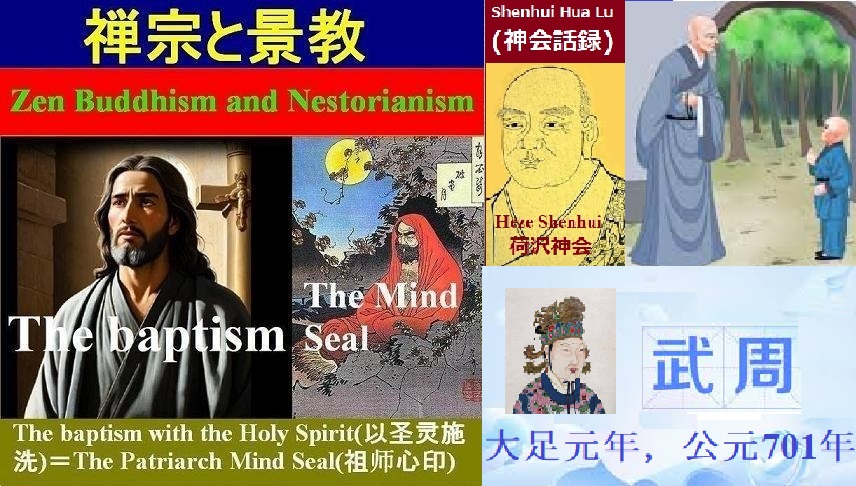
In 701 AD, the first year of the Dazu era(大足元年) when Empress Wu Zetian(則天武后) changed the name of the country from Tang(唐) to Zhou(周), a 14-year-old novice monk named Heze Shenhui(荷沢神会) met the Sixth Patriarch Huineng(六祖慧能) for the first time.
The Sixth Patriarch asked, "If you have your original face, you should know the Lord. Let me see it." The young man immediately replied, "I consider non-dwelling to be my original form; what I see is the Lord." The Sixth Patriarch said, "Young man, don't talk like you know anything!" and beat him down.
So, this time, let's take a look at the koan, "If you have your original face, you should know the Lord."
The origins and circumstances of becoming a monk of Shenhui
He Ze Shenhui(荷沢神会) was from Xiangyang(襄陽), Hubei Province(湖北省), and his secular surname was Gao(高). It is said that he studied and mastered the Five Classics(五経) and Laozi and Zhuangzi(老荘) at the age of 10, suggesting he was a precocious genius. Later, he read the "Book of Later Han(後漢書)," learned about Buddhism, and abandoned his ambition to serve in government to become a monk.
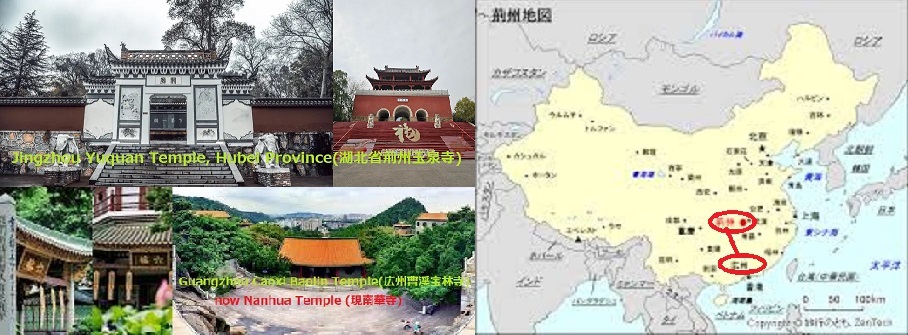
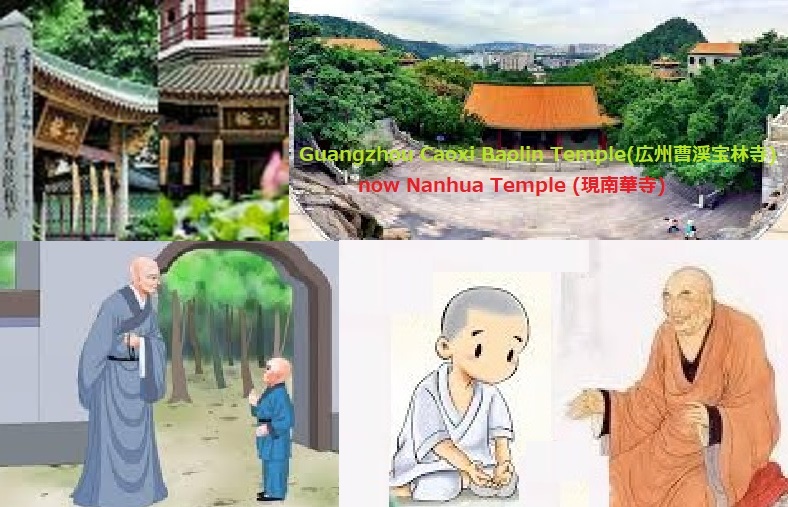
Shenhui studied for three years at Yuquan Temple(玉泉寺) in Jingzhou(荊州), Hubei Province, under Shenxiu(神秀), the founder of Northern Zen Buddhism, which emphasizes gradual enlightenment. In 701 AD, the first year of the Dazu era(大足元年) when Empress Wu Zetian(則天武后) changed the name of the country from Tang to Zhou, the 14-year-old novice went to Caoxi(曹渓) in Guangdong Province(広東省) at Shenxiu's suggestion and studied under Zen Master Huineng(慧能禅師), the founder of Southern Zen Buddhism, which emphasizes sudden enlightenment, and the sixth patriarch(第六祖) of Chinese Zen Buddhism.
Incidentally, the straight-line distance from Jingzhou City in Hubei Province to Caoxi (Shaoguan City) in Guangdong Province is approximately 770 kilometers. Today, even using expressways, it takes 8.5 to 10 hours to cover a distance of around 800 kilometers. However, if one were to travel on foot along the main route that followed the Xiang River upstream and crossed the mountains at that time, it is estimated that it would have taken 40 to 50 days (AI answer).
The Zen dialogue between Huineng and Shenhui
When the Sixth Patriarch Huineng saw the young Shenhui enter the abbot's quarters, he greeted him with words of encouragement, saying, "Knowledgeable boy, you've traveled a long distance. It must have been difficult."
Then, Huineng got straight to the point and asked, "Have you brought your true essence with you?"
The boy immediately replied, "I have brought it with me."
Huineng then pressed on with a sharp retort, "If you have your original face, you should know the Lord. Let me see it."
However, Shenhui replied, "My true essence is non-dwelling; what I see is the Lord."
The Patriarch roared, "Hey kid, don't speak as if you know everything!" and struck the boy repeatedly with his staff. However, Shenhui was said to have been overjoyed at having encountered the great wisdom of a being he had never met in countless eons, despite being beaten. (Shenhui Hua Lu)
At the age of 22, Huineng, a young firewood seller, was inspired by a passage from the Diamond Sutra he overheard on a street corner in Guangzhou: "One should have no place to dwell, and one should give rise to that mind.(応無所住而生其心)" He became a disciple of the Fifth Patriarch, Hongren, and eight months later, he was designated Hongren's successor and bestowed a volume of the Diamond Sutra. However, in response to Huineng's question, "If you have your original face, you should know the Lord," the 14-year-old Shenhui cleverly turned Huineng's signature passage from the Diamond Sutra—"One should have no place to dwell, and one should give rise to that mind."—on its head, retorting, "My true essence is non-dwelling; what I see is the Lord."
This mirrors the time Huineng, seeing through Yinzong's intention to test his own abilities after receiving the Fifth Patriarch's seal of approval, accepted the challenge using Yinzong's signature text, the Nirvana Sutra, and brilliantly answered. At that time, Yin Zong asked Huineng, a mere hunter from the Four Society, to take him on as a disciple, but Huineng beat the young Shenhui with his staff.
Origin of Koan
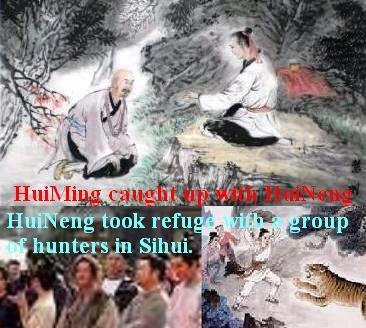
"The Original Face" is a grand koan that originates from a question posed by the Sixth Patriarch Huineng, who was designated as the successor to the Fifth Patriarch Hongren, to Venerable Huiming, who had pursued him to retrieve the Fifth Patriarch's robes and bowls, at Dayu Ling, located on the border of Jiangxi and Guangdong provinces: "Think neither good nor evil. Before your parents were born, at that very moment, what was Venerable Huiming's original face (your intrinsic nature)?" It forms the core of Zen doctrine.
However, these doctrines were only established after the Song dynasty, and the expressions in the "Platform Sutra of the Sixth Patriarch" and "ShenHui Hua Lu," which are believed to have been written during the Tang dynasty when Zen Buddhism rose to prominence, such as "What is it that has come thus?(甚麼物恁麼来)?" and "If you have your original face, you should know the Lord. Let me see it." are difficult to understand. Nevertheless, they offer a glimpse into the prototype of the koan.
Interaction between Zen monks and Nestorianism
Furthermore, the expression "If you have your original face, you should know the Lord." suggests the influence of Nestorian Christianity, which was introduced to China at the time.
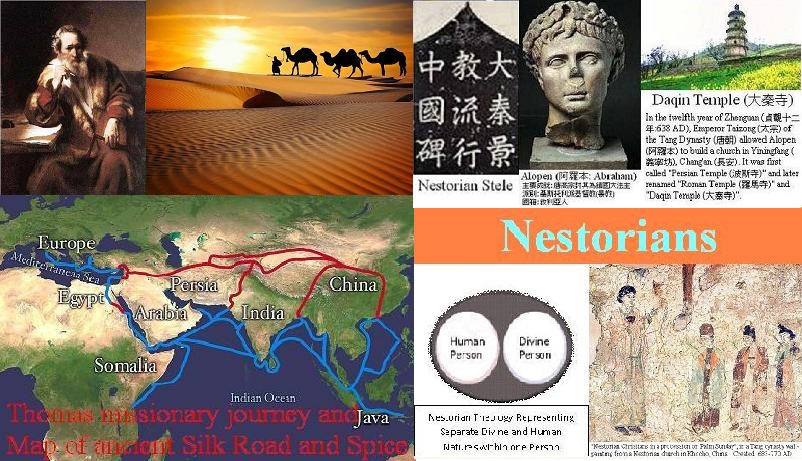
In 635 AD, Alopen (阿羅本: Abraham) led 21 Jingjiao followers, headed to China and met Emperor Taizong (太宗) of the Tang (唐) Dynasty and presented a Chinese translation of the Bible. Then Jingjiao was officially authorized to propagate in China. These facts are recorded on 'Daqin Jingjiao Popular Chinese Monument (大秦景教流行中国碑: Nestorian Stele),' which was discovered in Xi'an (西安) in the 17th century by the Society of Jesus (Jesuits). However, this is an official record, and it appears that the Jinngjiao followers had been preaching in China before then. Incidentally, Saint Thomas, one of the twelve apostles who was the first archbishop of the Assyrian Church of the East (Syrian Church), is said to have traveled to Assyria around 35 C.E., two years after Jesus' ascension, and then went on a mission to India. built seven churches, and then left to Beijing (北京), China in 62 C.E. Assyrian Eastern Church was called Jing-jiao (景教: Luminous Religion) in China."
Kukai(空海), the founder of Japanese Esoteric Shingon school (日本真言密教) of Buddhism, learned Sanskrit from Panruo Sanzang (般若三蔵), a friend of Jingjing (景浄) who was the author of the inscription of Nestorian Stele (景教碑). Therefore, Kukai seems to have had friendships with Jingjing and other Jingjiao followers such as Yisi (伊斯Isaac) who were active in Chang'an (長安) at that time.
Thus, Zen monks of the time of the Sixth Patriarch Huineng, especially the young He Ze Shenhui, may have been well-versed in the Nestorian Gospel of Thomas.
Ferthermore, why did the records of the questions and answers of Zen's predecessors come to be called koans (court cases)? This seems to be deeply related to the doctrine of ``the last day = final judgment'' preached by Nestorians.
Let one who seeks not stop seeking until finds.
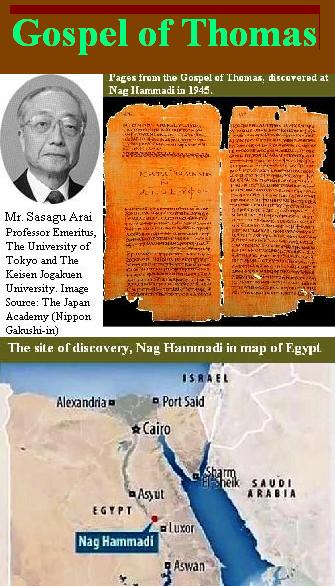
Jesus said, "Let one who seeks not stop seeking until finds. When one finds, one will be troubled. When one is troubled, one will marvel and will reign over all."(Gospel of Thomas, Verse 2)
According to Mr. Sasagu Arai(荒井献), author of the Japanese edition of the Gospel of Thomas, the goal of "seeking" is to "rule over all things," and "rule over all things" is synonymous with "kingly rule" = "the Kingdom," and for Thomas, "the Kingdom" ultimately means "human beings' inherent self-control."
In other words, for Jesus in the Gospel of Thomas, the role of the Messiah was to realize the "manifestation of the Kingdom" and, ultimately, the "true self-governance of humanity."
【thesis】 "A man can possess eternal life through accepting testimony of the Son of man and being baptized by him." (John 5:24)
【anti-thesis】 But "The one who comes from the earth cannot accept the testimony by one from heaven."(John 3:32)
How then can a man possess eternal life?
【synthesis】 "If you want to be baptized with the Holy Spirit, you can just go back to the word which was with God in the beginning (John 1:1) and certify that God is truthful. (John 3:33)"
When he said, "You are Huichao," Zen Master Fayan thrusted vivid Self in Huichao in front of his eyes. (The Origin of Christianity P.171)