Zen Buddhism and Nestorianism Series 27:The succession to the sixth patriarch
<◆Zen Buddhism and Nestorianism Series 27:The succession to the sixth patriarch>
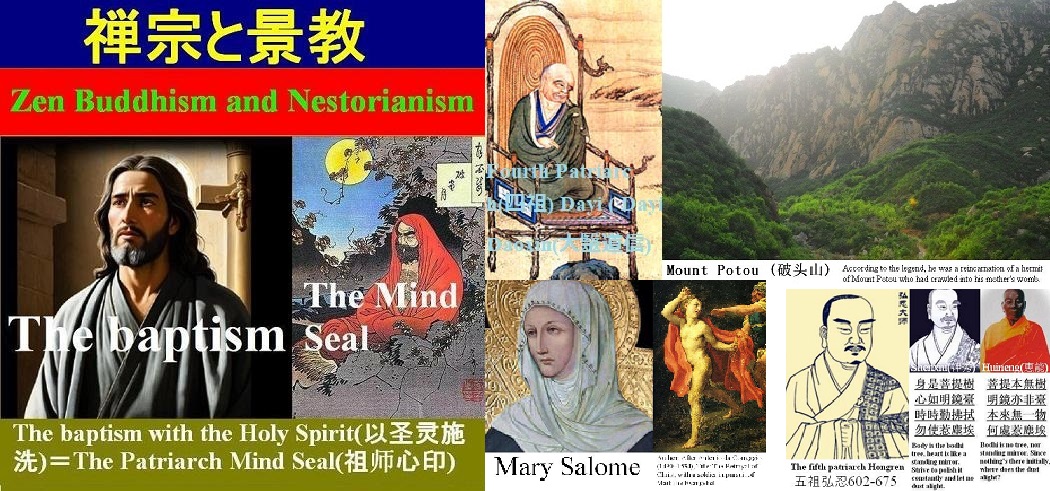
Chinese Zen Buddhism did not show significant development from its founder, Bodhidharma(菩提達磨), who arrived in Guangzhou, Guangdong Province, China, at the age of over 150, and then spent nine years facing a wall in a cave attached to the Shaolin Temple on Mount Song in Henan Province before passing away at the age of over 160, to its fourth patriarch, Daoxin(道信), who is said to have propagated the teachings to hermits on Mount Potou in Hubei Province. However, it experienced rapid growth under the sixth patriarch, Huineng(慧能), who inherited the teachings of the fifth patriarch, Hongren(弘忍). This time, let's explore the circumstances surrounding the succession of the sixth patriarch.
Body is the bodhi tree
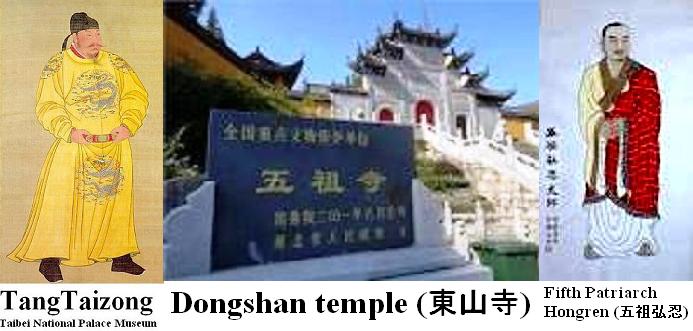
During the ZhenGuan period (貞観年間627-649) of Emperor Taizong(太宗), when the Tang Dynasty was at its peak, the Fifth Patriarch Hongren (五祖弘忍602-675), the abbot of Dongshan temple (東山寺or Huangmeishan temple) of Huangmei district, Qizhou, Hubei Province(湖北省蘄州黄梅県黄梅山) in China, one day told all his disciples to write a gatha (poem) on the temple southern passage wall, for him to chose the sixth patriarch.
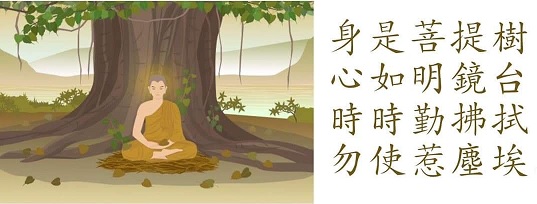
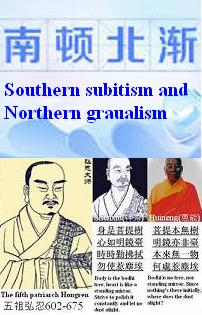
Venerable Shenxiu (605-706), the head monk, soon wrote a gatha for Hongren, which read: "Body is the bodhi tree; heart is like a standing mirror bright. Strive to polish it constantly and let no dust alight."
Hongren told the rest of his disciples, "Light incense, pay respect to this gatha and practice according to this gatha." However, privately, Hongren told Shenxiu, "You have arrived at the gate, but haven't entered." Hongren asked Shenxiu to compose another gatha that demonstrated a true understanding.
Nothing's There Initially
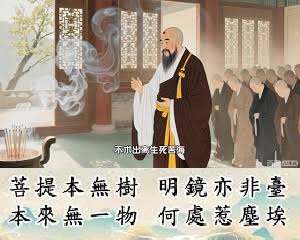
While Shenxiu was still thinking about his second verse, Huineng (638-713), a young illiterate novice working for the rice mill in the temple, composed a gatha and had it written on the wall next to Shenxiu's, It read as follows: "Bodhi is no tree, nor standing mirror bright. Since nothing's there initially, where does the dust alight?"
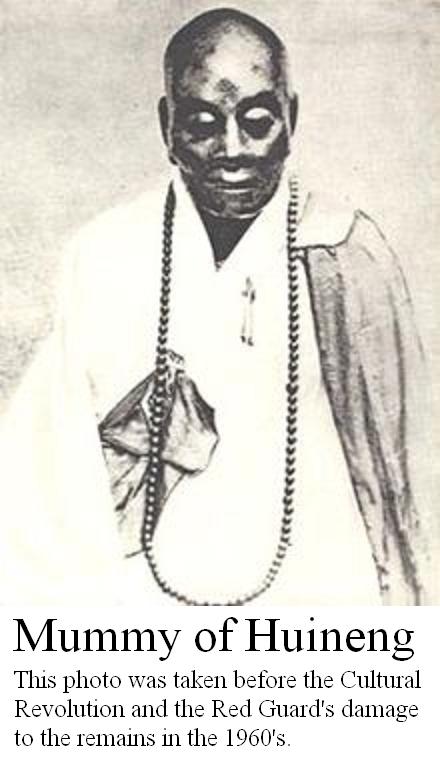
When Hongren came and saw it, he was very impressed. However he just said casually, "This hasn't seen the essential nature either," and proceeded to wipe the gatha off. But from then on Hongren received Huineng in his abode and expounded the Diamond Sutra to him. Hongren, having finished Huineng's intensive training, gave him a robe and begging bowl as symbols of the Dharma Seal of Sudden Enlightenment and ordered him to flee south in order to avoid the envy of others.
Thereafter 'Northern Chan' Buddhism succeeded the doctrines of Shenxiu's 'gradualism' and 'Southern Chan' Buddhism succeeded the doctrines of Huineng's 'subitism'. Both schools flourished in China.
Shenxiu and Huineng's gathas were both sides of the same coin and referred to the same enlightenment. Therefore Hongren was just in his dealings. There is no difference between the enlightenment of the northern and southern Chans. There is always only one Sudden enlightenment. But even after enlightenment, one will still suffer from worldly desires and will need to polish the mirror in his heart constantly in order that 'no dust alights thereon'. Without practice and diligence there can never be enlightenment.
Sequence of 4 star General Ming's renouncement of the world
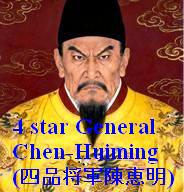
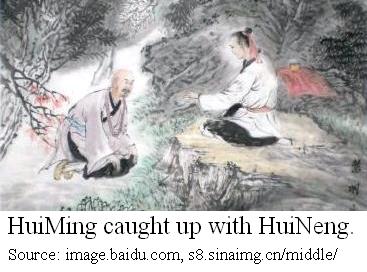
Now, at Dongshan temple, there was a senior monk named Chen-Huiming. Judging from his title as a fourth-rank general before he became a monk, he seems to have been a fairly high-ranking military officer. However, the strong-willed and simple Huiming grew weary of the intrigues and power struggles of court politics and military service, which sometimes required him to resort to harsh extortion. He became a monk, but even after more than ten years of training, he was still unable to attain enlightenment and was tormented by his fate. However, when he learned that Huineng, a novice monk who had been in charge of threshing the rice, had secretly received the seal of approval from the Fifth Patriarch for to become the Sixth Patriarch and run away, Senior Monk Huiming came to his senses and, without hesitation, used his strong legs to pursue Huineng, finally catching up with him at Dayuling, located on the border between Jiangxi and Guangdong provinces.
Think Neither Good Nor Evil
Huineng saw HuiMing coming. He thought HuiMing, a warrior of unparalleled strength, must have pursued him to seize back the robe and begging bowl. He threw out the robe and bowl on a rock, and said, "This robe represents the Buddha's teaching. We can't compete for it. Take it. It's yours."
However, HuiMing asked HuiNeng, "I came for the Dharma, not for the robe. Please expound the Dharma for me."
Then HuiNeng said in a loud voice, "Think neither good nor evil. Before your parents were born, at that very moment, what was Venerable Ming's original face (your intrinsic nature)?"
Right then HuiMing sweated the whole body and came to enlightenment. He worshiped HuiNeng with tears in his eyes and asked again, "Besides the intimate words and meaning that struck home of a moment ago, is there any further intimate message?"
Huineng said, "If it were said to you, it wouldn't be intimate. If you turn around and reflect, what's intimate is not in my words but within you." (The Gateless Barrier Case 23)
If you return to the beginning, where the Word was with God, and the Word was God (John 1:1-2), in other words, return to the original face before the parents were born, you can say, "Holy am I alone throughout heaven and earth. Grass, trees and the domains of all living things, all attain buddhahood." It is the ultimate salvation. You can obtain eternal life and know that the kingdom is within you and it is outside you.
The succession to the sixth patriarch
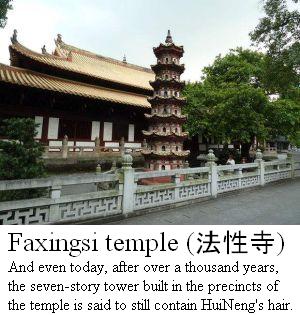
A tonsure ceremony of a young man was held at Faxingsi temple (法性寺) in Guangzhou, Guangdong province of China on the 15th of January in 676 AD, the third year of ShangYuan period of Emperor GaoZong (高宗) of the Tang dynasty. And a grand ordination ceremony was held on the 8th of February inviting famous Buddhist discipliners from nationwide and abroad such as ZhiGuang (智光) of Xian (西安), HuiJing (慧静) of Suzhou (苏州), TongYing (通应) of Jingzhou (荆州), QiDuoLuo (耆多罗) of Central India and Master Tripitaka MiDuo (蜜多) of Turkestan as a master of ordination, a master of karma (羯磨), a professor, a teacher of precepts and a witness of ordination respectively. In this way, the succession to the Sixth Patriarch of Zen Buddhism since Bodhidharma had transmitted the Mind Seal to China by the lad named Huineng (惠能) was realized.
Fulfillment of prophecy by two Master Tripitakas
Dating back from this 256 years ago, in 420 AD, during the era of Emperor Wu of Song in the Wei, Jin, and Southern and Northern Dynasties period, Indian Master Tripitaka Gunabhadra (求那跋陀罗394-468) prophesied, "A Bodhisattva in flesh will receive the full precepts at this altar in the future," when he built a Buddhist ordination platform here and 176 years ago, in 502 AD, that is, the first year of TianJian, the era name of Emperor Wu of Liang Dynasty, another Indian Master Tripitaka ZhiYue (智药) planted two Bodhi trees here and prophesied, "A Bodhisattva in flesh will be coming here and will preach under the trees and save abundant sentient beings after 170 years later. He will be the savior of the world conveying the Mind Seal of Buddha." Now their prophecies were fulfilled. And even today, after over a thousand years, the seven-story tower built in the precincts of the temple is said to still contain HuiNeng's hair.
Although HuiNeng was only a young (39 years old) street hawker of firewood in the town of Guangzhou until then, he shoved many high priests aside and suddenly succeeded to the Sixth Patriarch of Zen Buddhism in China. Therefore, the tonsure and ordination ceremonies of HuiNeng are said to have been a landmark incident in the history of Chinese Buddhism, just like, Jesus, the son of a Nazarene carpenter, suddenly appeared alone on the banks of the Jordan River and was baptized by John the Baptist (Mark 1:9/ Mat 3:13) and made a debut to the religious society of Jerusalem with testimony of John in Bethany. Jesus, too, is said to have been in his mid thirties at that time (Luke 3:23).
The origins of Southern subitism and Northern gradualism
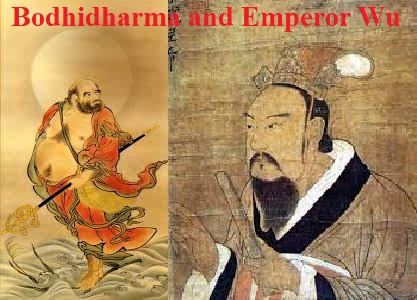
Perhaps Zen Buddhism was brought into China through both land and sea routes during the Wei, Jin, and Southern and Northern Dynasties period by multiple evangelists. Then Northern Gradualism Sect which emphasized "practice" advocating the doctrine of "Zen and scriptures are one" and Southern Subitism Sect which advocated "freedom of scriptures" and "no establishment of words and letters" flourished in the central plains of China under the rule of Northern Dynasties and Southern China ruled by Southern Dynasties respectively. And later, Emperor Wu of Liang Dynasty, who is known as the most enthusiastic royal patronage of Buddhism among the southern dynasties, and Bodhidharma's confrontation seems to have been arranged as a spectacle to adorn the first page of Zen Buddhism history in China.
In the central plains of China, where several dynasties established by different Non-Chinese ethnic groups rose and fell, because rulers often implemented policies to abolish Buddhism, there was no significant development of Zen Buddhism from the first ancestor Bodhidharma, the second patriarch HuiKe, the third patriarch SengCan and untill the fourth patriarch DaoXin (580-651). However, when Tang dynasty unified the whole of China, especially after Emperor GaoZong's empress Wu ZeTian (武则天627?-705) seized real power of court of Tang dynasty, Zen Buddhism grew rapidly under the fifth patriarch HongRen (601-675) in the central plains too.
What's interesting is that the succession ceremony for the Sixth Patriarch was held at Faxing Temple in Guangdong Province, not at Dongshan Temple in Hubei Province. Furthermore, despite the invitation of numerous high-ranking monks from Xi'an in Shaanxi Province, Suzhou in Jiangsu Province, Jingzhou in Hubei Province, and even from Central India and the Western Regions, the crucial Fifth Patriarch, Master Hongren, was absent.
It seems that the story of the shaving and ordination ceremony for the young Huineng at Faxing Temple and the succession of the Sixth Patriarch at Dongshan Temple were later combined. In any case, the fact that high-ranking monks were invited not only from all over China but also from India and the Western Regions to the shaving and ordination ceremony of a mere firewood seller suggests that complex political and religious dynamics, comparable to those surrounding Jesus' religious debut in Jerusalem, were at play.
Virgin Birth
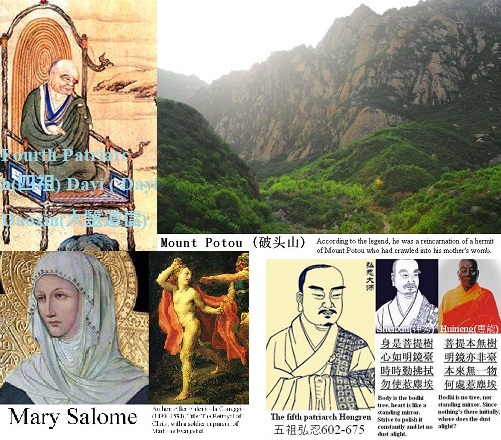
By the way, the Fifth Patriarch Hongren's surname is said to be "Zhou." But this is his mother's surname and there is no record regarding his father. According to the legend, he was a reincarnation of a hermit of Mount Potou who had crawled into his mother's womb.
When the Fourth Patriarch DaoXin settled down in Mount Potou of HuangMei-xian in modern Hubei Province, a hermit, the lord of the mountain, also asked him to become his pupil. DaoXin answered him, "I cannot allow a hundred over years old hermit to become my pupil. However if you are reborn and ask me again, I may accept you." The disappointed hermit went down the mountain to the village. He saw a girl washing by a brook. He remembered what DaoXin had said, "If you are reborn and ask me again, I may accept you." Then he immediately asked the girl "Can you put me up?" The girl replied, "If you do not mind a ragged, please put up." Then hermit cheekily crawled into her womb. When the girl's belly became bigger, her parents put away their nefarious daughter. In the fulness of time, she was delivered of a boy. People called the boy, who begged from door to door with his mother, "nameless brat." When this boy became seven years old, DaoXin saw him on the street of HuangMei-xian and asked the boy, "What is your name?" The boy answered, "My name is Buddha nature." DaoXin fell in love with this boy and asked his mother to let the boy become his disciple, without the faintest idea that the boy was a reincarnation of the hermit of Mount Potou. The mother consented to his request to take her son as his disciple. Then the boy became a monk at HuangMeiShan Dongshan temple. This nameless brat is said to have later become the Fifth Patriarch Hongren.
This story is not only reminiscent of virgin birth of Jesus but also implies the possibility that HongRen was DaoXin's own son, just as Mark, the author of the Gospel of Mark, is suspected Jesus' own son, because his mother, Salome Mary, the owner of the house where the Last Supper was held, shared the bed and the dining table with Jesus according to the Gospel of Thomas.
【thesis】 "A man can possess eternal life through accepting testimony of the Son of man and being baptized by him." (John 5:24)
【anti-thesis】 But "The one who comes from the earth cannot accept the testimony by one from heaven."(John 3:32)
How then can a man possess eternal life?
【synthesis】 "If you want to be baptized with the Holy Spirit, you can just go back to the word which was with God in the beginning (John 1:1) and certify that God is truthful. (John 3:33)"
When he said, "You are Huichao," Zen Master Fayan thrusted vivid Self in Huichao in front of his eyes. (The Origin of Christianity P.171)