Zen Buddhism and Nestorianism Series 28:Not the Wind, Not the Flag
<◆Zen Buddhism and Nestorianism Series 28:Not the Wind, Not the Flag>
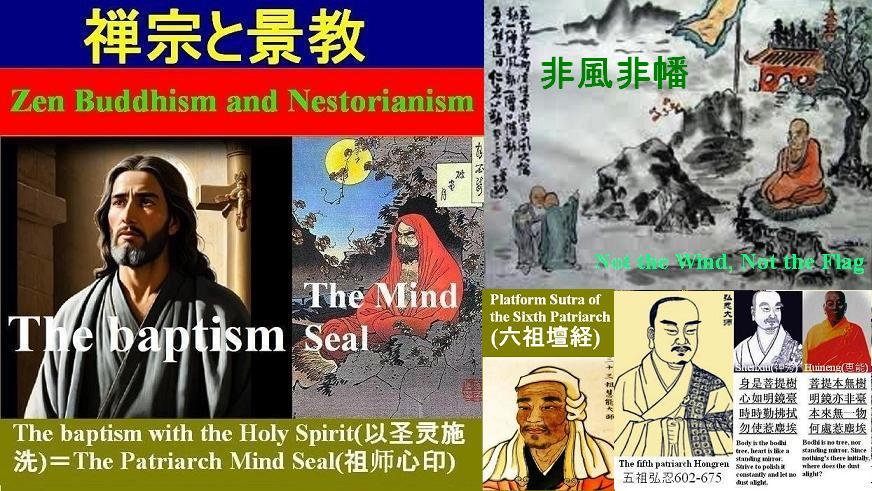
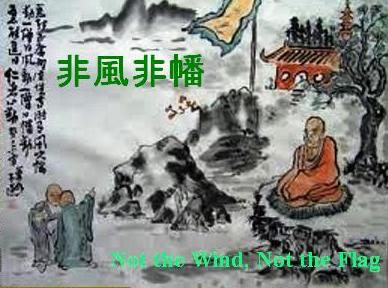
The Sixth Patriarch, incidentally, raised a banner. Two monks debated. One said, "The banner is moving." The other said, "The wind is moving." They argued back and forth but could not reach the truth. The sixth patriarch said, "It is not the wind that moves. It is not the flag that moves. It is your mind that moves." The two monks were struck with awe. (WuMenGuan, Case 29: Neither Wind Nor Banner)
This time, let's explore the koan from "WuMenGuan, Case 29: Neither Wind Nor Banner."
Huineng's origins
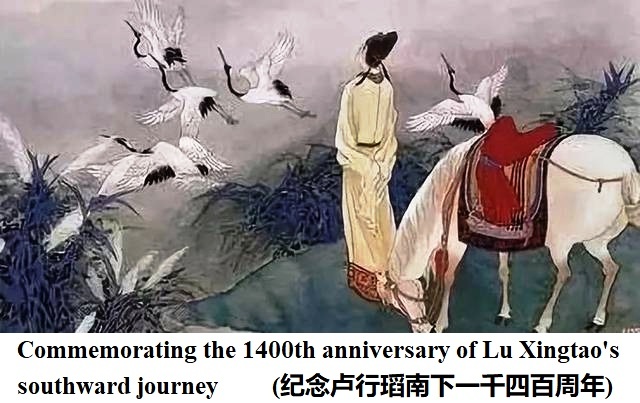
Huineng's secular surname was Lu(盧). His father, Lu Xingtao(盧行瑫), is said to be a descendant of the famous Lu clan of Fanyang(范陽), who served as court teachers during the late Han dynasty. Lu Xingtao served as a censor(监察御史) in the Tang dynasty, but was demoted (or exiled?) to Suolu County(索盧県), Xinzhou(新州), Lingnan (嶺南present-day Xinxing City, Guangdong Province) in 620 AD, the third year of the Wude(武德) era of Tang. In 632 AD, the sixth year of the Zhenguan(貞観) era of Emperor Taizong(太宗) of Tang, Lu Xingtao married a woman with the surname Li from Jiulang Village(旧郎村). Huineng was born in 638 AD, the twelfth year of the Zhenguan era of Tang, but Lu Xingtao died when Huineng was three years old. It is said that Huineng went to town and sold firewood to support his mother.
Huineng's awakening
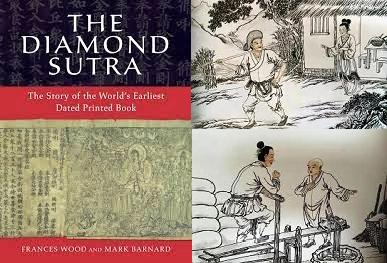
One day in the streets of Guangzhou(広州), 22-year-old Huineng heard a passage from the Diamond Sutra that said, "One should have no place to dwell, and one should give rise to that mind.(応無所住而生其心)" Inspired by this, he braved the mountain pass and rivers and traveled all the way to Dongshan Temple(東山寺) in Huangmei County(黄梅県), Hubei Province(湖北省), to seek refuge with the Fifth Patriarch, Hongren(五祖弘忍).
When the Fifth Patriarch asked, "Where are you from, and why have you come?", Huineng replied, "I came from Xinzhou(新州) in Lingnan(嶺南) because I want to become a Buddha." The Fifth Patriarch responded, "What, you're a Liliao(俚僚) from Lingnan! It's impossible." At the time, Lingnan was considered a frontier region with a low level of culture, and "Liliao(俚僚)" was a derogatory term used to insult the inhabitants. Huineng retorted, "Even if there is a difference in our birthplace (north or south), there is no difference in Buddha-nature (north or south)." It is said that the Fifth Patriarch said, "Oh, I see. Well then, go ahead and pound some rice," and accepted his apprenticeship.
Selection of the Sixth Patriarch
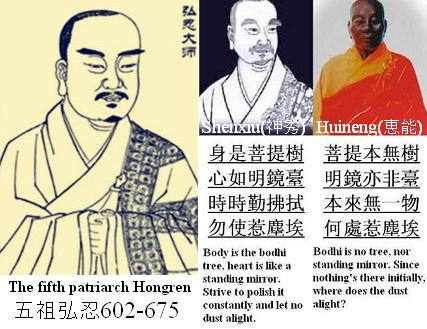
Just eight months later, the Fifth Patriarch, Master Hongren, ordered his disciples to compose gathas(偈頌) expressing their state of mind and post them on the wall of the South Corridor in order to designate his successor. Venerable Shenxiu(神秀), the head monk, soon wrote a gatha for Hongren, which read: "Body is the bodhi tree; heart is like a standing mirror bright. Strive to polish it constantly and let no dust alight." Huineng also composed a gatha, "Bodhi is no tree, nor standing mirror bright. Since nothing's there initially, where does the dust alight?" He asked one of his fellow disciples to write it next to Shenxiu's verse. Upon seeing Huineng's verse, the Fifth Patriarch bestowed upon him a volume of the Diamond Sutra, gave him the robes and bowl that had been passed down from Bodhidharma, and secretly sent Huineng to the south to avoid the jealousy of the other disciples. It is said that the Fifth Patriarch, after seeing Huineng off to the pier in Jiujiang (Shanxi Province), warned him to hide himself for five years and not preach.
No prophet is accepted in his own hometown. (Mat 13:57)
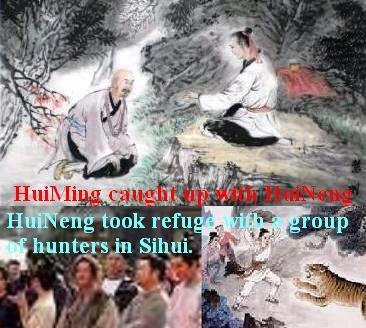
As expected, hundreds of monks pursued Huineng to retrieve his robes and bowl. After parting ways with one of them, Venerable Huiming, whom he caught up with at Dayuling, located on the border between Jiangxi and Guangdong provinces, Huineng went to his hometown of Caoxi (Qujiang District, Shaoguan City, Guangdong Province), but was not welcomed. He then took refuge with a group of hunters in Sihui (Zhaoqing City, Guangdong Province).
According to the "Platform Sutra of the Sixth Patriarch," written by him, Huineng lived in seclusion for 15 years, spending his time only preaching the hunters. During that time, he released all the game caught in their nets, and when he ate, he did not touch the meat, only eating vegetables.
Not the Wind, Not the Flag
However, realizing he could not live a life of seclusion forever, Huineng one day visited the Faxing Temple in Guangzhou to see Master Yin Zong, famous for his sermons on the Nirvana Sutra.
There, he found two monks arguing as they watched a flag fluttering in the wind: "The flag flutters because the wind is moving," and "No, the wind is moving because the flag is fluttering." Neither would budge. Huineng then said, "Neither the flag nor the wind is moving. It is only your minds that are moving." The two monks were horrified and fell silent.
The Non-Dual Law
Upon seeing this scene, Yin Zong invited Huineng to the seat of honor and asked, "I heard that the Huangmei robe and bowl were brought south. Could it be that you are the one?" When Huineng replied, "That is correct," Yin Zong asked him to bring the robe and bowl and announce it to the assembly.
Yin Zong then asked, "How are teachings given and received in Huangmei?" Huineng replied, "There are no teachings. Meditation and liberation are not discussed. One simply observes one's own nature." Yin Zong asked, "Why are meditation and liberation not discussed?" Huineng replied, "Because these are separate things and not the teachings of the Buddha. The Dharma is the non-dual law."
Buddha-nature is the non-dual law
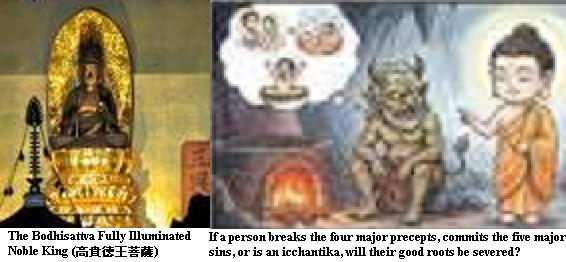
Therefore, Yin Zong further asked, "What is the non-dual law?" Huineng explained, "The Nirvana Sutra teaches that Buddha-nature is the non-dual law. Dewang-Bodhisattva asked the Buddha, 'If a person breaks the four major precepts, commits the five major sins, or is an icchantika, will their good roots be severed?' The Buddha replied, 'There are two kinds of good roots: one is permanent, and the other is impermanent. Buddha-nature is neither permanent nor impermanent. Therefore, it cannot be severed. Hence, it is called non-dual. One is good, and the other is evil. Buddha-nature is neither good nor evil. Therefore, it is called non-dual. Ordinary people see the five aggregates and the realms as two separate entities, but the wise understand that their essence is non-dual. This non-dual essence is Buddha-nature.'"
Yinzong was perplexed, but Huineng replied, "Since you expound on the Nirvana Sutra, you must understand the meaning of non-dualism."
icchantika
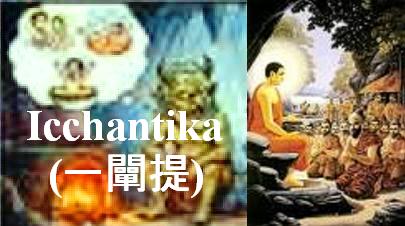
Incidentally, "一闡提" is a transliteration of the Sanskrit word "icchantika," originally meaning "one who desires" or "a bundle of desires." It is a Buddhist term referring to someone who does not believe in Buddhist teachings, lacks the karmic conditions (aptitude or possibility) for attaining Buddhahood, or slanders the Buddhist teachings. However, a Bodhisattva who vowed to save all sentient beings but did not become a Buddha themselves is also called an icchantika.
Yinzong's Discipleship and Huineng's Shaving ordination
Huineng, seeing through Yinzong's intention to test his own abilities after receiving the Fifth Patriarch's seal of approval, accepted the challenge using the Nirvana Sutra, Yinzong's specialty, and answered brilliantly.
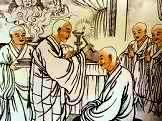
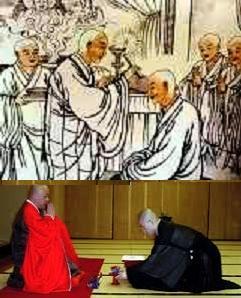
Yinzong then prostrated himself and praised Huineng, saying, "My lectures on the Nirvana Sutra are nothing but rubble, but your sermons are pure gold," and requested to become Huineng's disciple. In response, Huineng entrusted Yinzong with shaving his head and obtaining the precepts.
Thus, on the fifteenth day of the first month of the third year of the Shangyuan era of Emperor Gaozong of the Tang Dynasty, 676 AD, Huineng's shaving ceremony took place at Faxing Temple in Guangzhou, Guangdong Province, China. And a grand ordination ceremony was held on the 8th of February inviting famous Buddhist discipliners from nationwide and abroad such as ZhiGuang (智光) of Xian (西安), HuiJing (慧静) of Suzhou (苏州), TongYing (通应) of Jingzhou (荆州), QiDuoLuo (耆多罗) of Central India and Master Tripitaka MiDuo (蜜多) of Turkestan as a master of ordination, a master of karma (羯磨), a professor, a teacher of precepts and a witness of ordination respectively.
The Baptism of Jesus by John
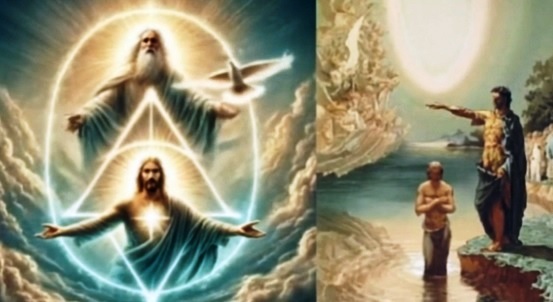
The encounter between Huineng(慧能) and Yinzong(印宗) is reminiscent of the scene when Jesus suddenly appeared in the Jordan River and was baptised with water by John.(Mark 1:9/ Mat 3:13/ Luke 3:21)
Then Jesus came from Galilee to the Jordan to be baptized by John. But John tried to deter him, saying, I need to be baptized by you, and do you come to me? Jesus replied, Let it be so now; it is proper for us to do this to fulfill all righteousness. Then John consented. As soon as Jesus was baptized, he went up out of the water. At that moment heaven was opened, and he saw the Spirit of God descending like a dove and lighting on him. (Matt 3:13-16)
Northern Chan's First Patriarch is Gunabhadra
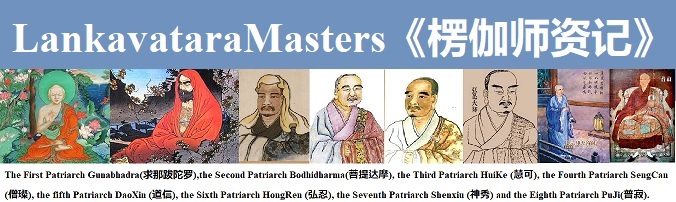
By the way, according to the genealogy of 'LankavataraMasters《楞伽师资记》' written by disciples of Yuquan Shenxiu (玉泉神秀 606?-706), who had received the Fifth Patriarch Hongren's mind seal and had become the founder of the Northern School of the Chan (Zen) Sect, the First Patriarch of Zen Buddhism in China is Gunabhadra(求那跋陀罗394–468) and Bodhidharma is the Second Patriarch. It is followed by the Third Patriarch HuiKe (慧可), the Fourth Patriarch SengCan (僧璨), the fifth Patriarch DaoXin (道信), the Sixth Patriarch HongRen (弘忍), the Seventh Patriarch Shenxiu (神秀) and the Eighth Patriarch PuJi(普寂).
Yuquan Shenxiu himself, who had been received the devotion of Empress Wu ZeTian (武則天) as the founder of Northern Gradualism Chan Sect (北宗禅), recommended Emperor ZhongZong (中宗:the son of Emperor Gaozong and Empress Wu) to listen HuiNeng's lecture as the latter was the legitimate successor of the Fifth Patriarch HongRen (五祖弘忍). But HuiNeng is said to have not come up to the court in the capital ChangAn using his illness as an excuse despite ShenXiu's repeated persuasion.
Betray one's true self
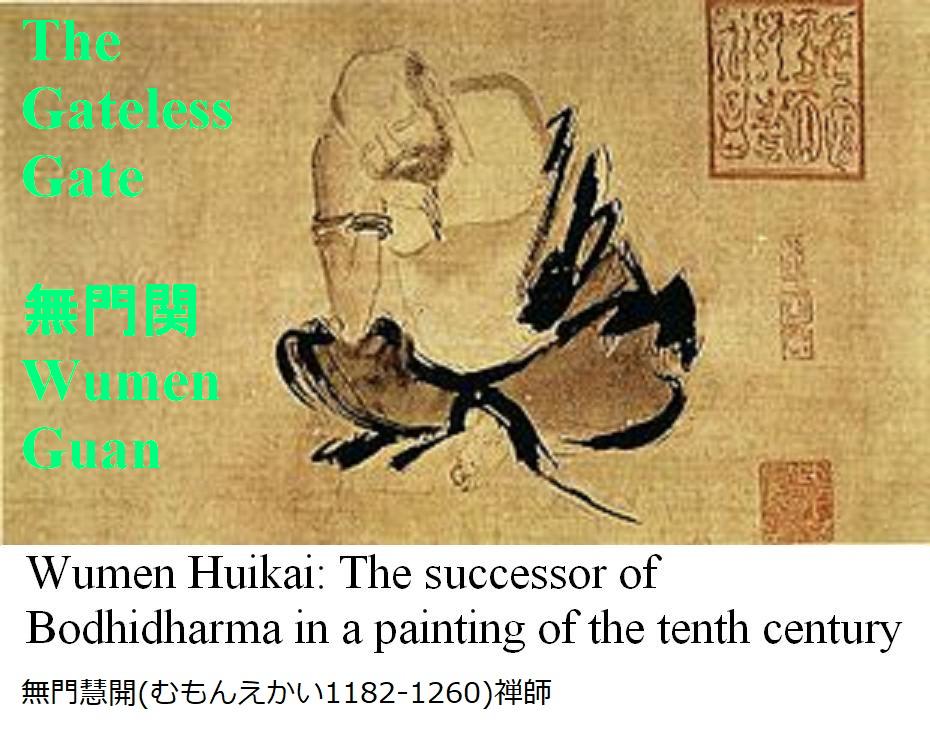
WuMen HuiKai(1182-1260), who wrote "WumenGuan," an analects of Koan (Koans are subjects which Zen masters give their students in the meditation hall) during the Sung Dynasty in China, commented this Koan 《The Gateless Gate, Case 29: Not the Wind, Not the Flag》, "It is not the wind that moves; it is not the flag that moves; it is not the mind that moves. Even the patriarch, you do not see anywhere. If you have a close grasp of the matter, you will see how the two monks, intending to buy iron, got gold. Then the patriarch will impatiently burst into laughter and betray his true self."
Incidentally, Sojun Ikkyu (1394-1481), a distinguished Zen priest who lived in the late Muromachi period of Japan and is said to have been the illegitimate child of Emperor Gokomatsu, composed a comic tanka poem, saying, "The Buddha is mischievous, come to this world to lead many people astray."
[Reference]
【Case】
The wind was flapping a temple flag, and two monks were having an argument about it. One said, "The flag is moving." The other said, "The wind is moving." They argued back and forth but could not reach the truth. The sixth patriarch said, "It is not the wind that moves. It is not the flag that moves. It is your mind that moves." The two monks were struck with awe.
【Commentary】
It is not the wind that moves; it is not the flag that moves; it is not the mind that moves. Where do you see the essence of the patriarch? If you have a close grasp of the matter, you will see how the two monks, intending to buy iron, got gold, and that the patriarch impatiently said a failure on the spot.
【thesis】 "A man can possess eternal life through accepting testimony of the Son of man and being baptized by him." (John 5:24)
【anti-thesis】 But "The one who comes from the earth cannot accept the testimony by one from heaven."(John 3:32)
How then can a man possess eternal life?
【synthesis】 "If you want to be baptized with the Holy Spirit, you can just go back to the word which was with God in the beginning (John 1:1) and certify that God is truthful. (John 3:33)"
When he said, "You are Huichao," Zen Master Fayan thrusted vivid Self in Huichao in front of his eyes. (The Origin of Christianity P.171)